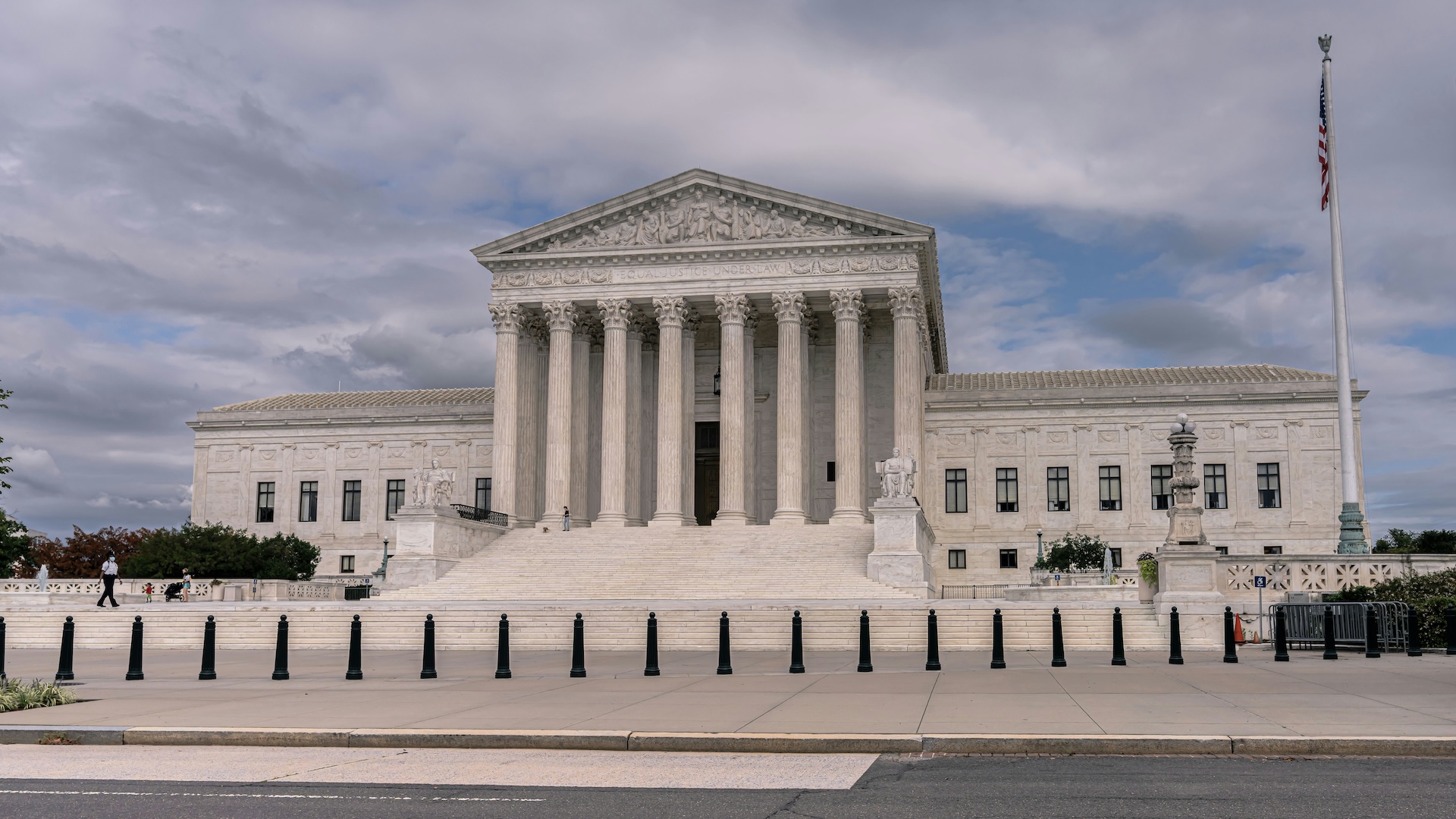

McGirt v. Oklahoma (U.S. Supreme Court, July 2020) - Domination Translator Series - Part 14
The decision in McGirt v. Oklahoma is of major significance for a host of reasons. The syllabus of the case references the “Major Crimes Act” (MCA) that was adopted by the U.S. Congress in 1885. Some historical background for passage of the MCA seems to be called for. As Francis Paul Prucha states in Documents of United States Indian Policy (1990): “When the Brulé Sioux chief Crow Dog was sentenced to death by the First Judicial Court of Dakota for the murder of Spotted Tail, he [Crow Dog] brought suit for release on the grounds that the federal court had no jurisdiction over crimes committed in the Indian country by one Indian against another. The [U.S.] Supreme Court upheld his petition and released him.”
The Major Crimes Act (MCA) provides that, within “the Indian country,” “[a]ny Indian who commits” certain enumerated offenses “shall be subject to the same law and penalties as all other persons committing any of [those] offenses, within the exclusive jurisdiction of the United States.” 18 U. S. C. §1153(a). The Supreme Court added:
“Indian country” includes “all land within the limits of any Indian reservation under the jurisdiction of the United States Government.” emphasis added §1151. Petitioner Jimcy McGirt was convicted by an Oklahoma state court of three serious sexual offenses. He unsuccessfully argued in state postconviction proceedings that the State lacked jurisdiction to prosecute him because he is an enrolled member of the Seminole Nation and his crimes took place on the Creek Reservation. He seeks a new trial, which, he contends, must take place in federal court.
Notice that the term “Indian country” contains the theme of domination: “Indian country includes “all land within the limits of any Indian reservation under the jurisdiction [domination] of the United States Government [domination].” Jurisdiction is typically understood as meaning “to speak the law,” but etymologically the word is also related to “danger” and “dungeon,” to be subject to the jurisdiction of someone else or some other entity is in danger of being taken captive, judged, and forced into a dungeon.
In the main decision of McGirt, Justice Neil Gorsuch skillfully inserts background information which provides insight into the centuries-old context for the case and the Court’s decision.
The federal government issued its own land patents to many homesteaders throughout the West. These patents transferred legal title and are the basis for much of the private land ownership in a number of States today. But no one thinks any of this diminished the United States’s claim to sovereignty over any land. To accomplish that would require an act of cession, the transfer of a sovereign claim from one nation to another. [Vol.] 3 E. Washburn, American Law of Real Property [domination] *521–524. (emphasis added*) And there is no reason why Congress cannot reserve land for tribes in much the same way, allowing them to continue to exercise governmental functions over land even if they no longer own it communally.
My dear friend Peter d’Errico managed to find the correct volume of Emory Washburn’s American Law of Real Property (1868). Interestingly, the digital file of Washburn’s book opens up into a panorama of important information about the so-called Doctrine of Christian discovery and domination.
4. Upon the discovery and settlement [domination] of this country by … [Christian] Europeans, there was a kind of ownership of the territory recognized [posited as existing] in the native tribes, though there seems to have been no well - defined idea of individual property in lands on the part of the natives beyond, perhaps, the spot [notice the term of diminishment] under immediate occupation.
5. Nor has any title, beyond the right of occupation, been recognized [by us] in the native tribes by any of the European governments [dominations] or their successors, the Colonies [of domination], the States [of domination], or the United States. The law [of domination] in this respect seems to have been uniform with all the Christian [domi-] nations that planted colonies here. They recognized no seisin of lands on the part of the Indian dwellers upon it, and the Indian’s deed was simply regarded as an extinguishment of his claim, and not as passing the soil or free hold. … It is accordingly true, that in none of the English patents making [purporting to make] grants of the country, is the Indian title excepted [out of the “grant”]; and even Penn had begun to fix his settlement under his patent before he conferred with the Indians as to the lands.1
The sovereignty [domination] and general property [domination] of the soil in the territory of the original English colonies, were claimed by and conceded to Great Britain, by right of discovery [and a claimed right of domination].2
Cases
- McGirt v. Oklahoma, 140 S. Ct. 2452 (2020). https://www.law.cornell.edu/supremecourt/text/18-9526
- United States v. Kagama, 118 U.S. 375 (1886). https://www.law.cornell.edu/supremecourt/text/118/375
- United States v. Mazurie, 419 U.S. 544 (1975). https://www.law.cornell.edu/supremecourt/text/419/544
- Johnson & Graham’s Lessee v. McIntosh, 21 U.S. (8 Wheat.) 543 (1823). https://www.law.cornell.edu/supremecourt/text/21/543
Series Navigation
| Previous: Onondaga Nation v. New York (Part 13) | Next: King Mountain and Beyond (Part 15) |
Copyright
© Copyright Steven T. Newcomb, January 1, 2026
Footnotes
-
Original footnote from Washburn not provided in this excerpt. Cf. Washburn, Emory. A Treatise on the American Law of Real Property. United States: Little, Brown,, 1868. https://www.google.com/books/edition/A_Treatise_on_the_American_Law_of_Real_P/3c8DAAAAQAAJ?hl=en&gbpv=1&pg=PP5&printsec=frontcover ↩
-
Cites Johnson v. McIntosh, https://www.law.cornell.edu/supremecourt/text/21/543. ↩
SUGGESTED CITATION
Steven T. Newcomb, "McGirt v. Oklahoma (U.S. Supreme Court, July 2020) - Domination Translator Series - Part 14," Doctrine of Discovery Project (14 January 2026), https://doctrineofdiscovery.org/blog/domination/mcgirt-oklahoma/.
Download citation formats:
Share on
X Facebook LinkedIn BlueskyDonate today!
Open Access educational resources cost money to produce. Please join the growing number of people supporting The Doctrine of Discovery so we can sustain this work. Please give today.