The Haudenosaunee Cases: Onondaga Nation v. N.Y. (Argued Oct. 12, 2012, decided October 19, 2012) - Domination Translator Series - Part 13
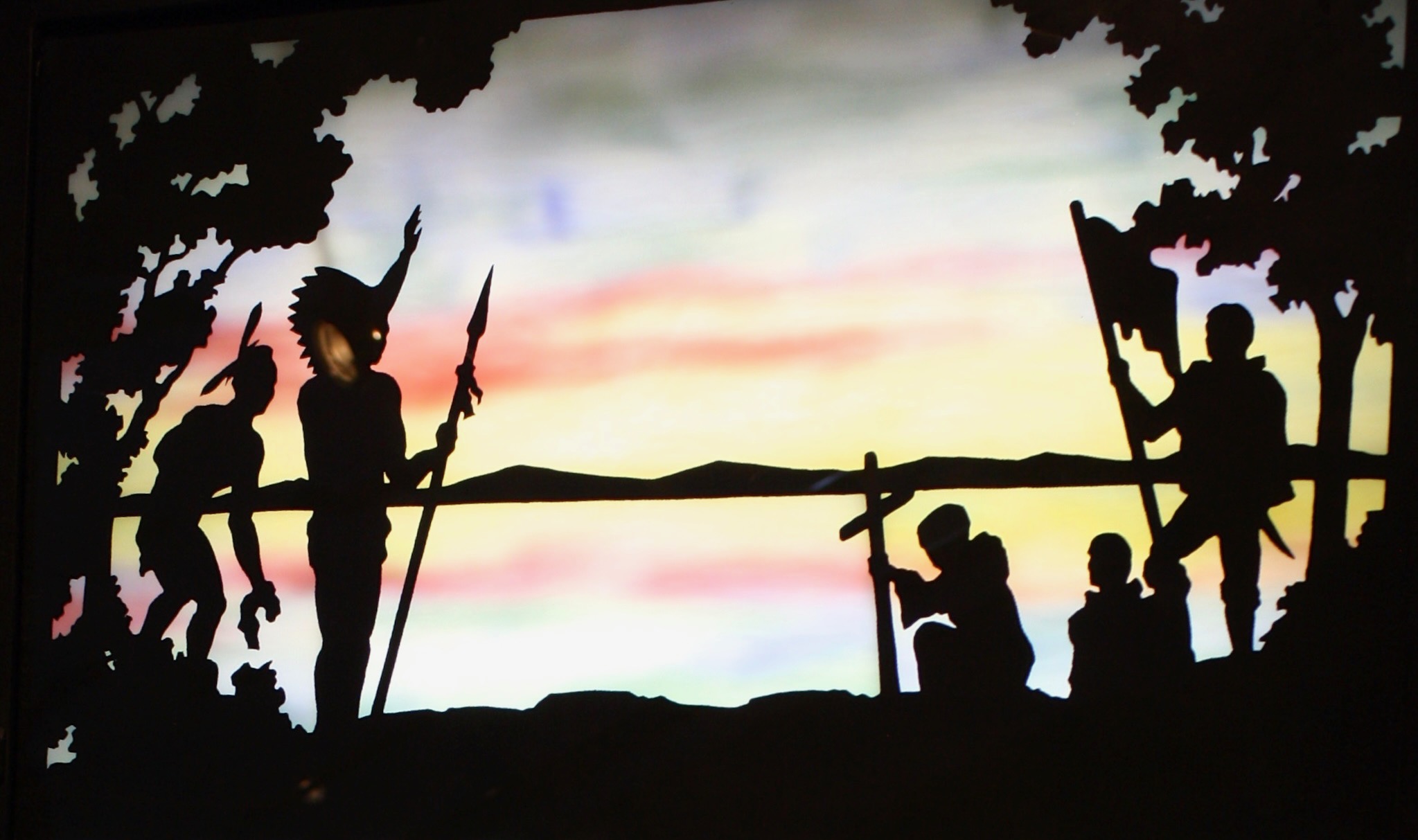
Let us set the context for this case regarding the Onondaga Nation versus New York State. When ships from Western Christendom arrived to the shores of North America centuries ago, the people of the Onondaga Nation (hereinafter “the Nation”) were living entirely free and independent on their own lands. The Onondaga people were, in other words, living free and independent of the Christian European claim of a right of domination.
Centuries later, the Onondaga Nation filed a lawsuit against the State of New York and several other defendants, including several major corporations. The Nation’s legal action has been described as an effort by the Nation to seek “the return” of an unspecified amount of its ancestral lands. The lower court ruled against the Nation, and the Nation appealed that decision to the Second Circuit Court of Appeals.
In its decision upholding the lower court’s dismissal of the Onondaga Nation’s lawsuit, the Second Circuit Court of Appeals stated:
“We reject the argument [by the Onondaga Nation] that it was inappropriate for the district court to take judicial notice of [the non-Native] population and development at this stage of litigation. Discovery is not needed to ascertain whether the City of Syracuse has been extensively developed and populated over the past 200 years. It was not an abuse of discretion for the trial court to take judicial notice of such obvious facts. See FED. R. EVID. 201(b) (judicial notice may be taken of facts that are “generally known”).
The Second Circuit Court of Appeals further stated:
The Onondaga urge that, if permitted to engage in fact discovery, they would show that they have “strongly and persistently protested” both the population and development of their ancestral lands.
Imagine if the Second Circuit Court of Appeals had stated:
The Onondaga urge that, if permitted to engage in fact discovery, they would show that they have “strongly and persistently protested” the claim of a right of domination over and to their ancestral lands by the State of New York and by the dominating society of the United States.
The Second Circuit Court of Appeals continued:
But evidence of similar protestations did not avail the plaintiffs in Cayuga [Nation v. Pataki]. There, the district court found “considerable proof as to the Cayuga’s efforts, beginning in 1853, and continuing right up until the filing of this lawsuit in 1980, to ‘make their voice heard’ with respect to the sales to the State [of Domination] of their homelands in 1795 and 1807.” Cayuga Indian Nation v. Pataki, 165 F.Supp.2d 266, 354 (N.D.N.Y.2001), rev’d, 413 F.3d 266 (2d Cir.2005), cert. denied, 547 U.S. 1128, 126 S.Ct. 2022, 164 L.Ed.2d 780 (2006). This Court nevertheless held that the equitable considerations barred a recovery. 413 F.3d at 277–78. Thus, even if the Onondaga showed after discovery that they had strongly and persistently protested, the “standards of federal Indian law and federal equity practice” stemming from Sherrill and its progeny would nonetheless bar their claim. 544 U.S. at 214, 125 S.Ct. 1478.
Finding no merit in the Onondaga’s remaining arguments, we hereby AFFIRM the judgment of the district court.
Contemplating the Hypothetical Use of a Domination Framework of Argumentation
In a hypothetical scenario, suppose the Onondaga Nation had stated that it had “strongly and persistently protested the claim of a right of domination against it by the State of New York, and by the dominating U.S. society. Given such a scenario, would the Second Circuit Court of Appeals have stated: “[E]ven if the Onondaga [Nation] showed after discovery that it had strongly and persistently protested New York’s claim of a right of domination against it, the “standards of federal Indian law and federal equity practice stemming from the doctrine of discovery and domination in the Sherrill decision and its progeny would nonetheless bar its claim”?
Let’s see what happens when we apply a Domination Framework of Analysis to the decision by the Second Circuit Court of Appeals in the Onondaga case. As the court stated:
This appeal is decided on the basis of the equitable bar on recovery of ancestral land in City of Sherrill v. Oneida Indian Nation, 544 U.S. 197, 125 S.Ct. 1478, 161 L.Ed.2d 386 (2005) (“Sherrill”), and [on the basis of] this Court’s cases of Cayuga Indian Nation v. Pataki, 413 F.3d 266 (2d Cir.2005) (“Cayuga “) and Oneida Indian Nation v. County of Oneida, 617 F.3d 114 (2010) ( “Oneida “).
The Second Court of Appeals did not need to reiterate the basis of the U.S. Supreme Court’s decision in City of Sherrill v. Oneida Indian Nation of New York. To refresh our memories, let us remind ourselves of how Justice Ruth Bader Ginsberg crafted footnote number one in Sherrill, while adding our own augmentation with a transcoding per our Domination Translator:
Under the “doctrine of [Christian] discovery [and domination],” County of Oneida v. Oneida Indian Nation of N. Y., 470 U. S. 226, 234 (1985) (Oneida II), “fee title to [and “ultimate dominion” over] the lands occupied by [free and independent] Indians when the colonists arrived became vested [claimed as a complete and consummated right] in the sovereign [dominator]—first the discovering [dominating] European nation and later the original States [of domination] and the United States,” [of domination, the American Empire], Oneida Indian Nation of N. Y. v. County of Oneida, 414 U. S. 661,67 (1974) (Oneida I).
The above clarification sheds light on the statement below by the Second Circuit Court of Appeals, which has also been augmented by our application of our Domination Translator:
Three specific factors determine when ancestral land claims are foreclosed on equitable [just, i.e. “Right of fair according to law. Legally right, lawful. “All human actions are either just or unjust as they are in conformity to or in opposition to law” Ballentine’s Law Dictionary, 1969] grounds: (1) “the length of time at issue between an historical injustice [that initiated an ongoing, persistent, and present day claim of a right of domination] and the present day”; (2) “the disruptive nature of claims [against the claim of a right of domination] long delayed”; and (3) “the degree to which these [Indian] claims [against the claim of a right of domination may] upset the justifiable expectations of individuals and entities [to benefit from the ongoing and present day claim of a right of domination still being used against Native nations] far removed from the events giving rise to the plaintiffs’ injury.” Oneida, 617 F.3d at 127; see also Sherrill, 544 U.S. at 214, 221, 125 S.Ct. 1478 (summarizing that the equitable considerations in this area are similar to “doctrines of laches, acquiescence, and impossibility,” and grew from “standards of federal Indian law and federal equity practice”) (internal quotation marks omitted). All three factors support dismissal.
Cases
- Onondaga Nation v. New York, 500 F.3d 51 (2d Cir. 2007). https://www.justia.com/cases/federal/f3d/500/51/
- City of Sherrill v. Oneida Indian Nation, 544 U.S. 197 (2005). https://www.law.cornell.edu/supremecourt/text/544/197
- Cayuga Indian Nation v. Pataki, 413 F.3d 266 (2d Cir. 2003). https://www.justia.com/cases/federal/f3d/413/266/
- United States v. Kagama, 118 U.S. 375 (1886). https://www.law.cornell.edu/supremecourt/text/118/375
Series Navigation
| Previous: Oneida Indian Nation v. County of Oneida (Part 12) | Next: McGirt v. Oklahoma (Part 14) |
Copyright
© Copyright Steven T. Newcomb, January 1, 2026
SUGGESTED CITATION
Steven T. Newcomb, "The Haudenosaunee Cases: Onondaga Nation v. N.Y. (Argued Oct. 12, 2012, decided October 19, 2012) - Domination Translator Series - Part 13," Doctrine of Discovery Project (13 January 2026), https://doctrineofdiscovery.org/blog/domination/haudenosaunee/onondaga-new-york/.
Download citation formats:
Share on
X Facebook LinkedIn BlueskyDonate today!
Open Access educational resources cost money to produce. Please join the growing number of people supporting The Doctrine of Discovery so we can sustain this work. Please give today.